I then worked this through with my heroine, in exactly the way I think I would myself if the same situation arose in real life. My heroine's daughter had been dumped by her husband who had been managing his business badly and not paying their mortgage. That was a good start, but I wanted to heap more pain on my heroine, I wanted to give her motivation to do something totally out of character - that was, to be dishonest. I made her daughter very pregnant (ie near to her time) then I gave her pre-eclampsia so she was rushed into hospital in a terrible state and couldn't do anything about the impending threat to her house. My heroine mother is a total giver, she loves her daughter to bits and always wants to make the world right for her. Given this sort of scenario, I justified her position in eventually stealing the money. But, I had just read Therese Raquin. Zola's fabulous study of guilt is a tale in which two people who commit a crime are practically driven insane by their joint guilt. They are also torn apart by it when their original plan in committing the crime was to allow them to spend their lives together. I was able to play out a little bit of the heavy consequences of guilt in my serial.
Thinking of my next one, I'm going to try and throw out a few of the what would you do if....? scenarios to see if anything sparks. This part of the creative process I find incredibly difficult. It's alchemy isn't it? It's creating something out of nothing. So, here goes.
What would you do if the one person who had ruined your life by their deception or evil disappeared - and then came back? Maybe they falsely accused your mother or father and as a result your parent, the one person who cared for you was imprisoned or ruined. Hmmm, okay, not a bad start. But it needs ratchetting up. So, what if you were very lowly in life and the person who had done you wrong was very high up the pecking order, pretty much untouchable in fact? Recent cases in the press about rich and famous people who have done bad things to powerless people resonate here. How would you bring them down and get your revenge?
Now THIS is looking more like a story. The reason that is the case is that the idea now contains a solid element of conflict and conflict as any author knows is the lifeblood of stories from Romeo and Juliet, to Atonement, to Cinderella, to Sleeping Beauty. Haven't they just made a film about Maleficent the evil fairy, you see, those conflicts run and run. That idea also ticks the odd box from my earlier Recipe post which concentrated on character rather than plot. In this plot idea, the main character is someone who has suffered misfortune through no fault of their own. We already feel sorry for them and we want them to triumph so, already our story has a journey and what are stories, if they are not journeys from a beginning, through conflict to a satisfactory resolution or end?
Finally, as ratchetting up helps one build a story, lets tighten the plot a bit by saying that the revenge has to be had within a given timeframe. Maybe our rich/powerful/influential baddie is leaving the country (or the planet if this is a sci fi story) and going away somewhere else where they might be untouchable. Maybe they are ill and dying and our hero/heroine needs to elicit revenge before the baddie dies. Maybe our baddie who is rich and powerful is about to become even more rich and powerful by taking over a company, or becoming Prime Minister/President or .... whatever. Now we have a clear goal (see my earlier Recipe post) and we have a tight time frame so we have built tension into the plot.
At last a story is beginning to emerge. I now have an idea of my characters and my plot. I know how the story is going to end. The revenge will be had - it is the three episodes in the middle I haven't worked out, but at least some of the ingredients for my recipe are now obvious and I even have a setting (I fancy ancient Britain as it is an unusual setting and I have done a bit of research). I also have a more specific setting because it is near where I live - the River Thames which has fascinated me for years. The river has been settled since prehistoric times and I recently went mudlarking on the Thames, where history is all around. You can literally pick it up, hold it in your hands and take a piece home. Finally, finally, my serial is taking shape..... It's got a long way yet but I may shortly put pen to paper.
Finally, many thanks to my wonderful daughter for taking the snap of me that appears in this article in the latest Writers' Forum. I'm there with fellow serial writers Jennie Bohnet and Wendy Clarke with more tips about the craft of writing serials, and a plug from me for the Woman's Weekly fiction workshops which if you can get there are great fun.
I then worked this through with my heroine, in exactly the way I think I would myself if the same situation arose in real life. My heroine's daughter had been dumped by her husband who had been managing his business badly and not paying their mortgage. That was a good start, but I wanted to heap more pain on my heroine, I wanted to give her motivation to do something totally out of character - that was, to be dishonest. I made her daughter very pregnant (ie near to her time) then I gave her pre-eclampsia so she was rushed into hospital in a terrible state and couldn't do anything about the impending threat to her house. My heroine mother is a total giver, she loves her daughter to bits and always wants to make the world right for her. Given this sort of scenario, I justified her position in eventually stealing the money. But, I had just read Therese Raquin. Zola's fabulous study of guilt is a tale in which two people who commit a crime are practically driven insane by their joint guilt. They are also torn apart by it when their original plan in committing the crime was to allow them to spend their lives together. I was able to play out a little bit of the heavy consequences of guilt in my serial.
Thinking of my next one, I'm going to try and throw out a few of the what would you do if....? scenarios to see if anything sparks. This part of the creative process I find incredibly difficult. It's alchemy isn't it? It's creating something out of nothing. So, here goes.
What would you do if the one person who had ruined your life by their deception or evil disappeared - and then came back? Maybe they falsely accused your mother or father and as a result your parent, the one person who cared for you was imprisoned or ruined. Hmmm, okay, not a bad start. But it needs ratchetting up. So, what if you were very lowly in life and the person who had done you wrong was very high up the pecking order, pretty much untouchable in fact? Recent cases in the press about rich and famous people who have done bad things to powerless people resonate here. How would you bring them down and get your revenge?
Now THIS is looking more like a story. The reason that is the case is that the idea now contains a solid element of conflict and conflict as any author knows is the lifeblood of stories from Romeo and Juliet, to Atonement, to Cinderella, to Sleeping Beauty. Haven't they just made a film about Maleficent the evil fairy, you see, those conflicts run and run. That idea also ticks the odd box from my earlier Recipe post which concentrated on character rather than plot. In this plot idea, the main character is someone who has suffered misfortune through no fault of their own. We already feel sorry for them and we want them to triumph so, already our story has a journey and what are stories, if they are not journeys from a beginning, through conflict to a satisfactory resolution or end?
Finally, as ratchetting up helps one build a story, lets tighten the plot a bit by saying that the revenge has to be had within a given timeframe. Maybe our rich/powerful/influential baddie is leaving the country (or the planet if this is a sci fi story) and going away somewhere else where they might be untouchable. Maybe they are ill and dying and our hero/heroine needs to elicit revenge before the baddie dies. Maybe our baddie who is rich and powerful is about to become even more rich and powerful by taking over a company, or becoming Prime Minister/President or .... whatever. Now we have a clear goal (see my earlier Recipe post) and we have a tight time frame so we have built tension into the plot.
At last a story is beginning to emerge. I now have an idea of my characters and my plot. I know how the story is going to end. The revenge will be had - it is the three episodes in the middle I haven't worked out, but at least some of the ingredients for my recipe are now obvious and I even have a setting (I fancy ancient Britain as it is an unusual setting and I have done a bit of research). I also have a more specific setting because it is near where I live - the River Thames which has fascinated me for years. The river has been settled since prehistoric times and I recently went mudlarking on the Thames, where history is all around. You can literally pick it up, hold it in your hands and take a piece home. Finally, finally, my serial is taking shape..... It's got a long way yet but I may shortly put pen to paper.
Finally, many thanks to my wonderful daughter for taking the snap of me that appears in this article in the latest Writers' Forum. I'm there with fellow serial writers Jennie Bohnet and Wendy Clarke with more tips about the craft of writing serials, and a plug from me for the Woman's Weekly fiction workshops which if you can get there are great fun.
Showing posts with label Writing a magazine serial. Show all posts
Showing posts with label Writing a magazine serial. Show all posts
Wednesday, 28 May 2014
PART TWO of my Recipe For Writing a Serial
Different writers approach the beginning of their work in different ways. I know very few who write to a perfect formula. A good place to start is: what would you do if....?
My Woman's Weekly serial, Finders Keepers had centred around a question I'd asked myself a million times. What would I do if.... I found a stash of money, buried. Now, knowing me, I'd be so terrified of the consequences of keeping it, I would give it in just to avoid all the anxiety of benefitting from ill gotten gains. But I wondered what if, a previously upstanding member of the community, my scientist heroine Erica had a very pressing need for some cash at just the time she discovered some buried money.
 I then worked this through with my heroine, in exactly the way I think I would myself if the same situation arose in real life. My heroine's daughter had been dumped by her husband who had been managing his business badly and not paying their mortgage. That was a good start, but I wanted to heap more pain on my heroine, I wanted to give her motivation to do something totally out of character - that was, to be dishonest. I made her daughter very pregnant (ie near to her time) then I gave her pre-eclampsia so she was rushed into hospital in a terrible state and couldn't do anything about the impending threat to her house. My heroine mother is a total giver, she loves her daughter to bits and always wants to make the world right for her. Given this sort of scenario, I justified her position in eventually stealing the money. But, I had just read Therese Raquin. Zola's fabulous study of guilt is a tale in which two people who commit a crime are practically driven insane by their joint guilt. They are also torn apart by it when their original plan in committing the crime was to allow them to spend their lives together. I was able to play out a little bit of the heavy consequences of guilt in my serial.
Thinking of my next one, I'm going to try and throw out a few of the what would you do if....? scenarios to see if anything sparks. This part of the creative process I find incredibly difficult. It's alchemy isn't it? It's creating something out of nothing. So, here goes.
What would you do if the one person who had ruined your life by their deception or evil disappeared - and then came back? Maybe they falsely accused your mother or father and as a result your parent, the one person who cared for you was imprisoned or ruined. Hmmm, okay, not a bad start. But it needs ratchetting up. So, what if you were very lowly in life and the person who had done you wrong was very high up the pecking order, pretty much untouchable in fact? Recent cases in the press about rich and famous people who have done bad things to powerless people resonate here. How would you bring them down and get your revenge?
Now THIS is looking more like a story. The reason that is the case is that the idea now contains a solid element of conflict and conflict as any author knows is the lifeblood of stories from Romeo and Juliet, to Atonement, to Cinderella, to Sleeping Beauty. Haven't they just made a film about Maleficent the evil fairy, you see, those conflicts run and run. That idea also ticks the odd box from my earlier Recipe post which concentrated on character rather than plot. In this plot idea, the main character is someone who has suffered misfortune through no fault of their own. We already feel sorry for them and we want them to triumph so, already our story has a journey and what are stories, if they are not journeys from a beginning, through conflict to a satisfactory resolution or end?
Finally, as ratchetting up helps one build a story, lets tighten the plot a bit by saying that the revenge has to be had within a given timeframe. Maybe our rich/powerful/influential baddie is leaving the country (or the planet if this is a sci fi story) and going away somewhere else where they might be untouchable. Maybe they are ill and dying and our hero/heroine needs to elicit revenge before the baddie dies. Maybe our baddie who is rich and powerful is about to become even more rich and powerful by taking over a company, or becoming Prime Minister/President or .... whatever. Now we have a clear goal (see my earlier Recipe post) and we have a tight time frame so we have built tension into the plot.
At last a story is beginning to emerge. I now have an idea of my characters and my plot. I know how the story is going to end. The revenge will be had - it is the three episodes in the middle I haven't worked out, but at least some of the ingredients for my recipe are now obvious and I even have a setting (I fancy ancient Britain as it is an unusual setting and I have done a bit of research). I also have a more specific setting because it is near where I live - the River Thames which has fascinated me for years. The river has been settled since prehistoric times and I recently went mudlarking on the Thames, where history is all around. You can literally pick it up, hold it in your hands and take a piece home. Finally, finally, my serial is taking shape..... It's got a long way yet but I may shortly put pen to paper.
Finally, many thanks to my wonderful daughter for taking the snap of me that appears in this article in the latest Writers' Forum. I'm there with fellow serial writers Jennie Bohnet and Wendy Clarke with more tips about the craft of writing serials, and a plug from me for the Woman's Weekly fiction workshops which if you can get there are great fun.
I then worked this through with my heroine, in exactly the way I think I would myself if the same situation arose in real life. My heroine's daughter had been dumped by her husband who had been managing his business badly and not paying their mortgage. That was a good start, but I wanted to heap more pain on my heroine, I wanted to give her motivation to do something totally out of character - that was, to be dishonest. I made her daughter very pregnant (ie near to her time) then I gave her pre-eclampsia so she was rushed into hospital in a terrible state and couldn't do anything about the impending threat to her house. My heroine mother is a total giver, she loves her daughter to bits and always wants to make the world right for her. Given this sort of scenario, I justified her position in eventually stealing the money. But, I had just read Therese Raquin. Zola's fabulous study of guilt is a tale in which two people who commit a crime are practically driven insane by their joint guilt. They are also torn apart by it when their original plan in committing the crime was to allow them to spend their lives together. I was able to play out a little bit of the heavy consequences of guilt in my serial.
Thinking of my next one, I'm going to try and throw out a few of the what would you do if....? scenarios to see if anything sparks. This part of the creative process I find incredibly difficult. It's alchemy isn't it? It's creating something out of nothing. So, here goes.
What would you do if the one person who had ruined your life by their deception or evil disappeared - and then came back? Maybe they falsely accused your mother or father and as a result your parent, the one person who cared for you was imprisoned or ruined. Hmmm, okay, not a bad start. But it needs ratchetting up. So, what if you were very lowly in life and the person who had done you wrong was very high up the pecking order, pretty much untouchable in fact? Recent cases in the press about rich and famous people who have done bad things to powerless people resonate here. How would you bring them down and get your revenge?
Now THIS is looking more like a story. The reason that is the case is that the idea now contains a solid element of conflict and conflict as any author knows is the lifeblood of stories from Romeo and Juliet, to Atonement, to Cinderella, to Sleeping Beauty. Haven't they just made a film about Maleficent the evil fairy, you see, those conflicts run and run. That idea also ticks the odd box from my earlier Recipe post which concentrated on character rather than plot. In this plot idea, the main character is someone who has suffered misfortune through no fault of their own. We already feel sorry for them and we want them to triumph so, already our story has a journey and what are stories, if they are not journeys from a beginning, through conflict to a satisfactory resolution or end?
Finally, as ratchetting up helps one build a story, lets tighten the plot a bit by saying that the revenge has to be had within a given timeframe. Maybe our rich/powerful/influential baddie is leaving the country (or the planet if this is a sci fi story) and going away somewhere else where they might be untouchable. Maybe they are ill and dying and our hero/heroine needs to elicit revenge before the baddie dies. Maybe our baddie who is rich and powerful is about to become even more rich and powerful by taking over a company, or becoming Prime Minister/President or .... whatever. Now we have a clear goal (see my earlier Recipe post) and we have a tight time frame so we have built tension into the plot.
At last a story is beginning to emerge. I now have an idea of my characters and my plot. I know how the story is going to end. The revenge will be had - it is the three episodes in the middle I haven't worked out, but at least some of the ingredients for my recipe are now obvious and I even have a setting (I fancy ancient Britain as it is an unusual setting and I have done a bit of research). I also have a more specific setting because it is near where I live - the River Thames which has fascinated me for years. The river has been settled since prehistoric times and I recently went mudlarking on the Thames, where history is all around. You can literally pick it up, hold it in your hands and take a piece home. Finally, finally, my serial is taking shape..... It's got a long way yet but I may shortly put pen to paper.
Finally, many thanks to my wonderful daughter for taking the snap of me that appears in this article in the latest Writers' Forum. I'm there with fellow serial writers Jennie Bohnet and Wendy Clarke with more tips about the craft of writing serials, and a plug from me for the Woman's Weekly fiction workshops which if you can get there are great fun.
I then worked this through with my heroine, in exactly the way I think I would myself if the same situation arose in real life. My heroine's daughter had been dumped by her husband who had been managing his business badly and not paying their mortgage. That was a good start, but I wanted to heap more pain on my heroine, I wanted to give her motivation to do something totally out of character - that was, to be dishonest. I made her daughter very pregnant (ie near to her time) then I gave her pre-eclampsia so she was rushed into hospital in a terrible state and couldn't do anything about the impending threat to her house. My heroine mother is a total giver, she loves her daughter to bits and always wants to make the world right for her. Given this sort of scenario, I justified her position in eventually stealing the money. But, I had just read Therese Raquin. Zola's fabulous study of guilt is a tale in which two people who commit a crime are practically driven insane by their joint guilt. They are also torn apart by it when their original plan in committing the crime was to allow them to spend their lives together. I was able to play out a little bit of the heavy consequences of guilt in my serial.
Thinking of my next one, I'm going to try and throw out a few of the what would you do if....? scenarios to see if anything sparks. This part of the creative process I find incredibly difficult. It's alchemy isn't it? It's creating something out of nothing. So, here goes.
What would you do if the one person who had ruined your life by their deception or evil disappeared - and then came back? Maybe they falsely accused your mother or father and as a result your parent, the one person who cared for you was imprisoned or ruined. Hmmm, okay, not a bad start. But it needs ratchetting up. So, what if you were very lowly in life and the person who had done you wrong was very high up the pecking order, pretty much untouchable in fact? Recent cases in the press about rich and famous people who have done bad things to powerless people resonate here. How would you bring them down and get your revenge?
Now THIS is looking more like a story. The reason that is the case is that the idea now contains a solid element of conflict and conflict as any author knows is the lifeblood of stories from Romeo and Juliet, to Atonement, to Cinderella, to Sleeping Beauty. Haven't they just made a film about Maleficent the evil fairy, you see, those conflicts run and run. That idea also ticks the odd box from my earlier Recipe post which concentrated on character rather than plot. In this plot idea, the main character is someone who has suffered misfortune through no fault of their own. We already feel sorry for them and we want them to triumph so, already our story has a journey and what are stories, if they are not journeys from a beginning, through conflict to a satisfactory resolution or end?
Finally, as ratchetting up helps one build a story, lets tighten the plot a bit by saying that the revenge has to be had within a given timeframe. Maybe our rich/powerful/influential baddie is leaving the country (or the planet if this is a sci fi story) and going away somewhere else where they might be untouchable. Maybe they are ill and dying and our hero/heroine needs to elicit revenge before the baddie dies. Maybe our baddie who is rich and powerful is about to become even more rich and powerful by taking over a company, or becoming Prime Minister/President or .... whatever. Now we have a clear goal (see my earlier Recipe post) and we have a tight time frame so we have built tension into the plot.
At last a story is beginning to emerge. I now have an idea of my characters and my plot. I know how the story is going to end. The revenge will be had - it is the three episodes in the middle I haven't worked out, but at least some of the ingredients for my recipe are now obvious and I even have a setting (I fancy ancient Britain as it is an unusual setting and I have done a bit of research). I also have a more specific setting because it is near where I live - the River Thames which has fascinated me for years. The river has been settled since prehistoric times and I recently went mudlarking on the Thames, where history is all around. You can literally pick it up, hold it in your hands and take a piece home. Finally, finally, my serial is taking shape..... It's got a long way yet but I may shortly put pen to paper.
Finally, many thanks to my wonderful daughter for taking the snap of me that appears in this article in the latest Writers' Forum. I'm there with fellow serial writers Jennie Bohnet and Wendy Clarke with more tips about the craft of writing serials, and a plug from me for the Woman's Weekly fiction workshops which if you can get there are great fun.

Wednesday, 21 May 2014
Recipe for writing a serial
Hi - I am in the process of writing another serial aimed at Women's Weekly. It's been tough conjuring up the essence of what it was which got the last one accepted. As I plan my next one, I thought I'd share the thought processes which worked last time and at the end of this posting I've shown how I applied my thoughts to come up with the serial that WW accepted. For a pantster rather than a plotter, any sort of planning is difficult. However, I have tried to get myself in the mode which I did last time in order to try and wave that magic wand, and apply the same principles to this latest attempt. So, here goes.
 Hero(s)and heroines
I am going to have two possible love interests in this serial and both must contain some or all of the elements which make a hero. I've just watched Gladiator and think Russell Crowe's character Maximus is totally a hero whereas Commodus is an archetypal villain. Don't we love to hate villains! Note to self - there was no villain in my last serial, perhaps one this time would be good. So my hero(s) and my heroine will have some of the following characteristics:
People like/respect them. Maximus is shown after an epic battle which has knocked the stuffing out of him, congratulating his troops, spending time with them. Beforehand he was doing the same - he thinks of others before himself. He is loyal to the failing emperor who tells us that Maximus is the son he should have had, he has more virtues than his own flawed flesh and blood. Maximus is modest, he doesn't want the glory of ruling Rome, he just wants to go back to his wife and family. Here is another hero trait, he honours his own, he is faithful and constant. We are shown him repeatedly kissing the little clay models of his family - show don't tell is personified here. Maximus is an expert (this is a fascinating characteristic in a main character) in warfare and fighting, you know with experts that there is certainty. We are fascinated by them, entranced by the abilities they have to understand the world. We are drawn to them. This quality is true even if they are expert criminals, many taless have been told about expert criminals and while they would not make true solid gold heroes, they are compelling. A wounded hero is a sort of gold star hero because we feel sorry for him. Maximus is wounded internally/psychologically by the evil Commodus's actions and of course externally - who could forget the final fight scene where Commodus has stuck a knife in Maximus before they even enter the gladiatorial arena. Here is another trait which makes us care for a leading character - someone who through no fault of their own experiences misfortune. In fact, Maximus has done everything possible to attract good fortune and still, he is beaten down by life. We want him to succeed, he's challenged constantly by life - here is a universal truth with which we can all identify. Finally a main character has to have a goal, clearly defined, and if that goal has a time limit, that ratchets up the suspense element of a story. With Maximus his goal initially is to go home. Then, once his wife and child have been murdered, it is to go home having avenged their killings. Goals can and do change along the way, in Gladiator, his home eventually is Elysium or heaven as that is where his family is and we even see an image of him being welcomed by them.
So in summary my hero(s) and my heroine will have at least some of these traits:
Be liked/respected by others
Be modest
Be faithful and constant
Be brave (Jennifer Lawrence as Catniss is the personification of the brave heroine - she does NOT let things happen to her, she makes them happen. She's also an expert with her hunting skills)
Be an expert
Be wounded internally/psychologically and possibly externally ie. bearing the visible memory of a wounding in the form of a scar or limp possibly (I love Jake Gyllenhaal as the hero of the film Prisoners - his twitch, blinking too hard, displays so much inner turmoil!)
Have a clear goal, ideally time limited (eg. with the lovely Jake, it is to save the kidnapped girls before the crazy kidnapper murders them)
In my serial Finders Keepers, the heroine, Erica is a scientist (there's her expert trait) whose daughter loves and depends upon her (ie. liked and respected by others). She finds a pile of banknotes buried and is tormented by whether to turn them in to the police or use them to help her daughter who is in hospital about to give birth and is in dire financial trouble. Erica takes matters into her own hands (so she is brave) and she acts to help her daughter who at one point says 'you always make things right' (faithful and constant). She has a broken marriage behind her (wounded internally) so she sort of ticks most of those boxes. Her goal is clear - to help her daughter. The hero, Logan Kershaw is very wounded as a soldier invalided out of the army. He doesn't have many friends, but this is okay, he still ticks the hero box as it's not because he's not likeable but because he is withdrawn. Part of his character arc, his changing character throughout the serial is that he gathers friends and a family to him in that he is eventually welcomed into Erica's family and one of the last scenes is of him with her daughter and grandchild. The fact that he befriends Erica and she takes to him is evidence of his ability to fulfil the first of the character traits above - to be liked/respected. He is modest about his bravery in the army and we know he's an expert from his past career. His goal is clear - he wants to stop Erica doing the wrong thing with the money and to catch the bad people who secreted it, before they catch her to get it back.
Well, sorry this has been such a long post, but it has really helped me to get my head around what I need to plan in my new serial. If it contributes to anyone else's writing, so much the better! These are not all my ideas, I've rarely had an original idea in my life, but I am indebted to the two books Save the Cat by Blake Snyder and Michael Hauge's 'Writing Screenplays that Sell' - they're the guys with the analytical brains, and the big ideas!
Woman's Weekly are still running their fiction courses which I can recommend, just Google them.
Happy writing all!!!
Hero(s)and heroines
I am going to have two possible love interests in this serial and both must contain some or all of the elements which make a hero. I've just watched Gladiator and think Russell Crowe's character Maximus is totally a hero whereas Commodus is an archetypal villain. Don't we love to hate villains! Note to self - there was no villain in my last serial, perhaps one this time would be good. So my hero(s) and my heroine will have some of the following characteristics:
People like/respect them. Maximus is shown after an epic battle which has knocked the stuffing out of him, congratulating his troops, spending time with them. Beforehand he was doing the same - he thinks of others before himself. He is loyal to the failing emperor who tells us that Maximus is the son he should have had, he has more virtues than his own flawed flesh and blood. Maximus is modest, he doesn't want the glory of ruling Rome, he just wants to go back to his wife and family. Here is another hero trait, he honours his own, he is faithful and constant. We are shown him repeatedly kissing the little clay models of his family - show don't tell is personified here. Maximus is an expert (this is a fascinating characteristic in a main character) in warfare and fighting, you know with experts that there is certainty. We are fascinated by them, entranced by the abilities they have to understand the world. We are drawn to them. This quality is true even if they are expert criminals, many taless have been told about expert criminals and while they would not make true solid gold heroes, they are compelling. A wounded hero is a sort of gold star hero because we feel sorry for him. Maximus is wounded internally/psychologically by the evil Commodus's actions and of course externally - who could forget the final fight scene where Commodus has stuck a knife in Maximus before they even enter the gladiatorial arena. Here is another trait which makes us care for a leading character - someone who through no fault of their own experiences misfortune. In fact, Maximus has done everything possible to attract good fortune and still, he is beaten down by life. We want him to succeed, he's challenged constantly by life - here is a universal truth with which we can all identify. Finally a main character has to have a goal, clearly defined, and if that goal has a time limit, that ratchets up the suspense element of a story. With Maximus his goal initially is to go home. Then, once his wife and child have been murdered, it is to go home having avenged their killings. Goals can and do change along the way, in Gladiator, his home eventually is Elysium or heaven as that is where his family is and we even see an image of him being welcomed by them.
So in summary my hero(s) and my heroine will have at least some of these traits:
Be liked/respected by others
Be modest
Be faithful and constant
Be brave (Jennifer Lawrence as Catniss is the personification of the brave heroine - she does NOT let things happen to her, she makes them happen. She's also an expert with her hunting skills)
Be an expert
Be wounded internally/psychologically and possibly externally ie. bearing the visible memory of a wounding in the form of a scar or limp possibly (I love Jake Gyllenhaal as the hero of the film Prisoners - his twitch, blinking too hard, displays so much inner turmoil!)
Have a clear goal, ideally time limited (eg. with the lovely Jake, it is to save the kidnapped girls before the crazy kidnapper murders them)
In my serial Finders Keepers, the heroine, Erica is a scientist (there's her expert trait) whose daughter loves and depends upon her (ie. liked and respected by others). She finds a pile of banknotes buried and is tormented by whether to turn them in to the police or use them to help her daughter who is in hospital about to give birth and is in dire financial trouble. Erica takes matters into her own hands (so she is brave) and she acts to help her daughter who at one point says 'you always make things right' (faithful and constant). She has a broken marriage behind her (wounded internally) so she sort of ticks most of those boxes. Her goal is clear - to help her daughter. The hero, Logan Kershaw is very wounded as a soldier invalided out of the army. He doesn't have many friends, but this is okay, he still ticks the hero box as it's not because he's not likeable but because he is withdrawn. Part of his character arc, his changing character throughout the serial is that he gathers friends and a family to him in that he is eventually welcomed into Erica's family and one of the last scenes is of him with her daughter and grandchild. The fact that he befriends Erica and she takes to him is evidence of his ability to fulfil the first of the character traits above - to be liked/respected. He is modest about his bravery in the army and we know he's an expert from his past career. His goal is clear - he wants to stop Erica doing the wrong thing with the money and to catch the bad people who secreted it, before they catch her to get it back.
Well, sorry this has been such a long post, but it has really helped me to get my head around what I need to plan in my new serial. If it contributes to anyone else's writing, so much the better! These are not all my ideas, I've rarely had an original idea in my life, but I am indebted to the two books Save the Cat by Blake Snyder and Michael Hauge's 'Writing Screenplays that Sell' - they're the guys with the analytical brains, and the big ideas!
Woman's Weekly are still running their fiction courses which I can recommend, just Google them.
Happy writing all!!!
 Hero(s)and heroines
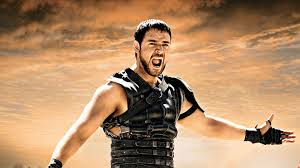
I am going to have two possible love interests in this serial and both must contain some or all of the elements which make a hero. I've just watched Gladiator and think Russell Crowe's character Maximus is totally a hero whereas Commodus is an archetypal villain. Don't we love to hate villains! Note to self - there was no villain in my last serial, perhaps one this time would be good. So my hero(s) and my heroine will have some of the following characteristics:
People like/respect them. Maximus is shown after an epic battle which has knocked the stuffing out of him, congratulating his troops, spending time with them. Beforehand he was doing the same - he thinks of others before himself. He is loyal to the failing emperor who tells us that Maximus is the son he should have had, he has more virtues than his own flawed flesh and blood. Maximus is modest, he doesn't want the glory of ruling Rome, he just wants to go back to his wife and family. Here is another hero trait, he honours his own, he is faithful and constant. We are shown him repeatedly kissing the little clay models of his family - show don't tell is personified here. Maximus is an expert (this is a fascinating characteristic in a main character) in warfare and fighting, you know with experts that there is certainty. We are fascinated by them, entranced by the abilities they have to understand the world. We are drawn to them. This quality is true even if they are expert criminals, many taless have been told about expert criminals and while they would not make true solid gold heroes, they are compelling. A wounded hero is a sort of gold star hero because we feel sorry for him. Maximus is wounded internally/psychologically by the evil Commodus's actions and of course externally - who could forget the final fight scene where Commodus has stuck a knife in Maximus before they even enter the gladiatorial arena. Here is another trait which makes us care for a leading character - someone who through no fault of their own experiences misfortune. In fact, Maximus has done everything possible to attract good fortune and still, he is beaten down by life. We want him to succeed, he's challenged constantly by life - here is a universal truth with which we can all identify. Finally a main character has to have a goal, clearly defined, and if that goal has a time limit, that ratchets up the suspense element of a story. With Maximus his goal initially is to go home. Then, once his wife and child have been murdered, it is to go home having avenged their killings. Goals can and do change along the way, in Gladiator, his home eventually is Elysium or heaven as that is where his family is and we even see an image of him being welcomed by them.
So in summary my hero(s) and my heroine will have at least some of these traits:
Be liked/respected by others
Be modest
Be faithful and constant
Be brave (Jennifer Lawrence as Catniss is the personification of the brave heroine - she does NOT let things happen to her, she makes them happen. She's also an expert with her hunting skills)
Be an expert
Be wounded internally/psychologically and possibly externally ie. bearing the visible memory of a wounding in the form of a scar or limp possibly (I love Jake Gyllenhaal as the hero of the film Prisoners - his twitch, blinking too hard, displays so much inner turmoil!)
Have a clear goal, ideally time limited (eg. with the lovely Jake, it is to save the kidnapped girls before the crazy kidnapper murders them)
In my serial Finders Keepers, the heroine, Erica is a scientist (there's her expert trait) whose daughter loves and depends upon her (ie. liked and respected by others). She finds a pile of banknotes buried and is tormented by whether to turn them in to the police or use them to help her daughter who is in hospital about to give birth and is in dire financial trouble. Erica takes matters into her own hands (so she is brave) and she acts to help her daughter who at one point says 'you always make things right' (faithful and constant). She has a broken marriage behind her (wounded internally) so she sort of ticks most of those boxes. Her goal is clear - to help her daughter. The hero, Logan Kershaw is very wounded as a soldier invalided out of the army. He doesn't have many friends, but this is okay, he still ticks the hero box as it's not because he's not likeable but because he is withdrawn. Part of his character arc, his changing character throughout the serial is that he gathers friends and a family to him in that he is eventually welcomed into Erica's family and one of the last scenes is of him with her daughter and grandchild. The fact that he befriends Erica and she takes to him is evidence of his ability to fulfil the first of the character traits above - to be liked/respected. He is modest about his bravery in the army and we know he's an expert from his past career. His goal is clear - he wants to stop Erica doing the wrong thing with the money and to catch the bad people who secreted it, before they catch her to get it back.
Well, sorry this has been such a long post, but it has really helped me to get my head around what I need to plan in my new serial. If it contributes to anyone else's writing, so much the better! These are not all my ideas, I've rarely had an original idea in my life, but I am indebted to the two books Save the Cat by Blake Snyder and Michael Hauge's 'Writing Screenplays that Sell' - they're the guys with the analytical brains, and the big ideas!
Woman's Weekly are still running their fiction courses which I can recommend, just Google them.
Happy writing all!!!
Hero(s)and heroines
I am going to have two possible love interests in this serial and both must contain some or all of the elements which make a hero. I've just watched Gladiator and think Russell Crowe's character Maximus is totally a hero whereas Commodus is an archetypal villain. Don't we love to hate villains! Note to self - there was no villain in my last serial, perhaps one this time would be good. So my hero(s) and my heroine will have some of the following characteristics:
People like/respect them. Maximus is shown after an epic battle which has knocked the stuffing out of him, congratulating his troops, spending time with them. Beforehand he was doing the same - he thinks of others before himself. He is loyal to the failing emperor who tells us that Maximus is the son he should have had, he has more virtues than his own flawed flesh and blood. Maximus is modest, he doesn't want the glory of ruling Rome, he just wants to go back to his wife and family. Here is another hero trait, he honours his own, he is faithful and constant. We are shown him repeatedly kissing the little clay models of his family - show don't tell is personified here. Maximus is an expert (this is a fascinating characteristic in a main character) in warfare and fighting, you know with experts that there is certainty. We are fascinated by them, entranced by the abilities they have to understand the world. We are drawn to them. This quality is true even if they are expert criminals, many taless have been told about expert criminals and while they would not make true solid gold heroes, they are compelling. A wounded hero is a sort of gold star hero because we feel sorry for him. Maximus is wounded internally/psychologically by the evil Commodus's actions and of course externally - who could forget the final fight scene where Commodus has stuck a knife in Maximus before they even enter the gladiatorial arena. Here is another trait which makes us care for a leading character - someone who through no fault of their own experiences misfortune. In fact, Maximus has done everything possible to attract good fortune and still, he is beaten down by life. We want him to succeed, he's challenged constantly by life - here is a universal truth with which we can all identify. Finally a main character has to have a goal, clearly defined, and if that goal has a time limit, that ratchets up the suspense element of a story. With Maximus his goal initially is to go home. Then, once his wife and child have been murdered, it is to go home having avenged their killings. Goals can and do change along the way, in Gladiator, his home eventually is Elysium or heaven as that is where his family is and we even see an image of him being welcomed by them.
So in summary my hero(s) and my heroine will have at least some of these traits:
Be liked/respected by others
Be modest
Be faithful and constant
Be brave (Jennifer Lawrence as Catniss is the personification of the brave heroine - she does NOT let things happen to her, she makes them happen. She's also an expert with her hunting skills)
Be an expert
Be wounded internally/psychologically and possibly externally ie. bearing the visible memory of a wounding in the form of a scar or limp possibly (I love Jake Gyllenhaal as the hero of the film Prisoners - his twitch, blinking too hard, displays so much inner turmoil!)
Have a clear goal, ideally time limited (eg. with the lovely Jake, it is to save the kidnapped girls before the crazy kidnapper murders them)
In my serial Finders Keepers, the heroine, Erica is a scientist (there's her expert trait) whose daughter loves and depends upon her (ie. liked and respected by others). She finds a pile of banknotes buried and is tormented by whether to turn them in to the police or use them to help her daughter who is in hospital about to give birth and is in dire financial trouble. Erica takes matters into her own hands (so she is brave) and she acts to help her daughter who at one point says 'you always make things right' (faithful and constant). She has a broken marriage behind her (wounded internally) so she sort of ticks most of those boxes. Her goal is clear - to help her daughter. The hero, Logan Kershaw is very wounded as a soldier invalided out of the army. He doesn't have many friends, but this is okay, he still ticks the hero box as it's not because he's not likeable but because he is withdrawn. Part of his character arc, his changing character throughout the serial is that he gathers friends and a family to him in that he is eventually welcomed into Erica's family and one of the last scenes is of him with her daughter and grandchild. The fact that he befriends Erica and she takes to him is evidence of his ability to fulfil the first of the character traits above - to be liked/respected. He is modest about his bravery in the army and we know he's an expert from his past career. His goal is clear - he wants to stop Erica doing the wrong thing with the money and to catch the bad people who secreted it, before they catch her to get it back.
Well, sorry this has been such a long post, but it has really helped me to get my head around what I need to plan in my new serial. If it contributes to anyone else's writing, so much the better! These are not all my ideas, I've rarely had an original idea in my life, but I am indebted to the two books Save the Cat by Blake Snyder and Michael Hauge's 'Writing Screenplays that Sell' - they're the guys with the analytical brains, and the big ideas!
Woman's Weekly are still running their fiction courses which I can recommend, just Google them.
Happy writing all!!!
Sunday, 2 February 2014
Writing a serial for Woman's Weekly
 My first serial for Woman's Weekly, 'Finders Keepers' is in this week's copy of the magazine. (It's a 3-parter) I've tried short stories with them in the past without success so was really pleased to have this one accepted. I am a bit obsessed at the moment with romantic suspense and have been devouring the novels of Josephine Tey (a blog post about her might follow when I have time, she wrote two of the most interesting crime novels I've come across).
People often ask where ideas come from. The one for 'Finders Keepers' was simple speculation. I can't remember how many times I have wondered what on earth I would do if I found a quantity of money in a suitcase, on a train, buried in a wood...... Of course you'd give it up, wouldn't you??? But, given extraordinary circumstances, people do extraordinary things. One way of generating interesting fiction is to put perfectly ordinary people in outlandish situations and test them which is what I did with my heroine Erica McAdam. First of all though, you have to show the reader your character living in their normal life, not for long though, the reader wants to get to the nitty gritty of the problems that face them, as soon as possible. Sometimes I look at a serial, particularly a 3-parter like a three act play. Firstly you need to establish who the main players are and make the reader FEEL for them. That is essential early on. I therefore made my main character a hard working woman on her own and I gave her a daughter who is in trouble through unexpected circumstances. We feel for people who experience misfortune and we like people who are loved or highly regarded by others. Then, in the first episode, I establish a problem, a deep problem for my characters to get out of. That sets everything up for act two, or, in a 3-part serial, episode two.
Act two sees our characters fighting for their lives. No, not necessarily literally are they facing murder, or hanging off a cliff edge, but, they must fear destruction of something very important to them. Their way of life, their liberty, their capacity to care for those they love. So now, you see, showing the reader your main characters in their 'element' the person they are, in episode one has been useful. My heroine is not a rich woman in monetary terms, so she has nothing to lose in terms of wealth. But she does have her freedom and the job she loves as an environmental researcher at stake. She also has her role as a mother which defines her as much as her career. She is an honest woman who is faced with potentially being driven to do something dishonest. In episode two therefore, you need to dig your characters deeper into the problems which face them. Maybe let them make some bad mistakes. And, ideally, you need to add another major element to carry that episode forwards. In other words, you need to put even more pressure on your characters. I won't reveal what the second element is as part two of 'Finders Keepers' isn't out yet. However, as a clue, I would say the arrival of another important character can always act as a catalyst which helps to keep the momentum going.
By act 3, or rather episode three, I like to create a black moment. A moment when everything looks as if it is lost. Where all that testing appears to have found your heroine or hero wanting, where they question the previous decisions they have taken. Haven't we all thought at times that we've blown it, that the worst is going to happen, that we can never get out of a complete mess we've made of things. But, we survive. Things change. WE CHANGE. Those changes are fascinating for readers to experience with characters for whom they have some sympathy. The resolving of that black moment, how people get out of life's problems and triumph is so important in giving a reader a satisfying result from reading a serial. After all, they have invested a huge amount of time in you. They've spent money on buying the magazine with episode 1 and hopefully have waiting to buy the magazines with episode 2 and 3 in it.
So, if you're writing a serial, make the characters sympathetic people we care for, give them a past and give them important elements in their life that they would find it painful to lose. Put them through hell, then get them out of that awful mess. Hopefully then you will come up with a story an editor will have faith in and readers will enjoy. Job done!
My first serial for Woman's Weekly, 'Finders Keepers' is in this week's copy of the magazine. (It's a 3-parter) I've tried short stories with them in the past without success so was really pleased to have this one accepted. I am a bit obsessed at the moment with romantic suspense and have been devouring the novels of Josephine Tey (a blog post about her might follow when I have time, she wrote two of the most interesting crime novels I've come across).
People often ask where ideas come from. The one for 'Finders Keepers' was simple speculation. I can't remember how many times I have wondered what on earth I would do if I found a quantity of money in a suitcase, on a train, buried in a wood...... Of course you'd give it up, wouldn't you??? But, given extraordinary circumstances, people do extraordinary things. One way of generating interesting fiction is to put perfectly ordinary people in outlandish situations and test them which is what I did with my heroine Erica McAdam. First of all though, you have to show the reader your character living in their normal life, not for long though, the reader wants to get to the nitty gritty of the problems that face them, as soon as possible. Sometimes I look at a serial, particularly a 3-parter like a three act play. Firstly you need to establish who the main players are and make the reader FEEL for them. That is essential early on. I therefore made my main character a hard working woman on her own and I gave her a daughter who is in trouble through unexpected circumstances. We feel for people who experience misfortune and we like people who are loved or highly regarded by others. Then, in the first episode, I establish a problem, a deep problem for my characters to get out of. That sets everything up for act two, or, in a 3-part serial, episode two.
Act two sees our characters fighting for their lives. No, not necessarily literally are they facing murder, or hanging off a cliff edge, but, they must fear destruction of something very important to them. Their way of life, their liberty, their capacity to care for those they love. So now, you see, showing the reader your main characters in their 'element' the person they are, in episode one has been useful. My heroine is not a rich woman in monetary terms, so she has nothing to lose in terms of wealth. But she does have her freedom and the job she loves as an environmental researcher at stake. She also has her role as a mother which defines her as much as her career. She is an honest woman who is faced with potentially being driven to do something dishonest. In episode two therefore, you need to dig your characters deeper into the problems which face them. Maybe let them make some bad mistakes. And, ideally, you need to add another major element to carry that episode forwards. In other words, you need to put even more pressure on your characters. I won't reveal what the second element is as part two of 'Finders Keepers' isn't out yet. However, as a clue, I would say the arrival of another important character can always act as a catalyst which helps to keep the momentum going.
By act 3, or rather episode three, I like to create a black moment. A moment when everything looks as if it is lost. Where all that testing appears to have found your heroine or hero wanting, where they question the previous decisions they have taken. Haven't we all thought at times that we've blown it, that the worst is going to happen, that we can never get out of a complete mess we've made of things. But, we survive. Things change. WE CHANGE. Those changes are fascinating for readers to experience with characters for whom they have some sympathy. The resolving of that black moment, how people get out of life's problems and triumph is so important in giving a reader a satisfying result from reading a serial. After all, they have invested a huge amount of time in you. They've spent money on buying the magazine with episode 1 and hopefully have waiting to buy the magazines with episode 2 and 3 in it.
So, if you're writing a serial, make the characters sympathetic people we care for, give them a past and give them important elements in their life that they would find it painful to lose. Put them through hell, then get them out of that awful mess. Hopefully then you will come up with a story an editor will have faith in and readers will enjoy. Job done!
Wednesday, 1 May 2013
Writing a Magazine Serial Part 4
This week I have decided to tackle pace and story arc in relation to writing a serial for women's magazines. Obviously, the story and the characters dictate both. However, for a serial to be compelling enough for readers to invest in it for a number of weeks, you need significant 'hooks' to keep the reader coming back. I can hear other writers thinking, dopey woman, we always need hooks, so what's different with a serial? This is true but of course with a novel or novella, the writer very much dictates exactly where the hooks go in and how major they are. The author largely orchestrates the ebb and flow of their tale. They might start with a very slow burn and work up to a crescendo. Or they might crash into the story with a scene at the start which smacks the reader between the eyes. It is true, when writing a novel, that one's editor may point out that a certain part of the book has gone a bit slack (it's not only in your pie baking that you can get a soggy middle) and they might ask you to up the action at certain points. However, when you craft a novel (as opposed to a serial), the ups and downs largely happen when you dictate them because the novel stands up very much as a whole. Also, when the reader reads it, they are the ones who decide how much they take in at any one sitting and whether they roll over and switch off the light after one chapter or whether they read into the small hours because your book is so compelling they can't put it down.
It is somewhat different with a weekly serial because even if the reader wanted to read the next three instalments they can't! Doing an 8 part serial, the length was around 5000+ words for each instalment. That is more than enough for each instalment to stand alone almost like a short story does. However, it also has to carry forward the central plotline whether that is a romance or a crime, a mystery or whatever. My over-arching plotline was a romance. That element of the plot was simple in that it began in instalment one and it ended in instalment 8. Along the way though there were many other plotlines which sometimes began and ended in one instalment but by and large would start in one instalment, carry over two or three (not necessarily consecutive instalments) and be wound up at whatever point seemed right. The thing is, if you're winding up plotlines say in instalment three or four you also MUST introduce new ones which can run over a few more issues of the magazine to keep the momentum going. As a fly-by-the-seat of your pants writer, who hates to plan, that was a tall order for me. However, without the necessity of doing a synopsis because that's what the editors demand, I think I could have come very unstuck. I had a major wobbly around instalment 6 where a number of side plots involving minor characters had come and gone. I simply could not think of another smallish plotline which was interesting enough to make readers buy the magazine the following week, but which was simple enough that I could easily resolve it by the end of instalment 8. Luckily, one of the older characters came to my rescue. She had been very much in the background, a character who had an identity only because other characters talked about her. It was time for Nana to step centre stage and I put her in a plot which involved her being unable to recover from a serious illness because of a wrong she had done many years before. Introducing this gave me an opportunity for readers to see her dilemma and wonder how she would resolve her guilt and make everything okay. That plot I used to keep readers 'on the boil' until the last two instalments when the major two plots of the serial - the romance and a crime - came together and the ends were all neatly tied up.
One of the key things in a magazine serial is the cliffhanger ending for each instalment. There were occasions when I fought with this. But once into the mode of writing serials I found that the cliffhanger ending would become obvious as I started to write, in other words as I started to structure the instalment I could 'spot' opportunities for the cliffhanger. The most important thing is that this doesn't have to be over dramatic. It doesn't have to be someone mangled in a car accident, or a revelation about a secret baby etc. A cliffhanger ending only needs to be enough to make someone curious enough to buy next week's magazine. So, although I did have some dramatic ones, I also had some more low key ones eg where a character had made a discovery and was scared stiff of telling someone else knowing the impact it would have upon them. It's worth, when considering writing a serial to study ongoing ones in magazines and making a note of the sort of cliffhangers they choose to give you an idea of how other writers handle this very important aspect of serial writing.
One of the best examples of this being done skillfully apart from in magazines is, to my mind, in a soap opera or a series such as Downton Abbey. With Downton, the inheritance was a major plotline which ran all the way through. Other plotlines such as romances between various characters, the imprisonment of characters, births, deaths and marriages came and went. Some plotlines taking up just one episode, others running for two or three or more. It would be a useful exercise, if one was setting out to write a serial to take perhaps the first series of Downton and make a note of the plotlines, what they were, when they started, and how long they lasted. You could do a lot worse than look at that to see how a serial could be plotted with enough action to keep people interested but without so much it became confusing. Add interesting characters and voila, you'd have the skeleton to give you an idea of how the pattern of a compelling serial is arrived at. That ends my series of posts on writing serials. I hope you've enjoyed it and will find it useful in writing your own.
Wednesday, 24 April 2013
Writing a Magazine Serial Part 3
I guess there as many different types of serial as there are types of story. For me though, the opportunity to imagine living in a part of the world I love for the months it takes to write a serial was a considerable attraction. I have a sort of holiday disease which I catch every time I go on holiday which consists of imagining vividly what it would be like to chuck in my life in chilly old England (much as I love it here) and go and live abroad.
In the cold light of day, I know that wherever you live there are problems, bills to be paid, cleaning to be done, whatever. But in my imagination, that magic place 'abroad' is always sunny, always exciting and full of possibilities. I think that is why Italy as a setting appealed so much, and if it appeals to me, it was likely it would appeal to readers. People's Friend now have a lovely blog of their own and recently, one of the editors there was talking about how curious it is to work on a magazine where you are always some weeks if not months in advance. So in the sunny, warm days of autumn, they might be choosing articles and reading stories about snow and Christmas. Whilst in the endless winter we have just had I hope it has been as much fun for them as it has been for me to work on something set in the bright, light warmth of an Italian spring.
Setting a serial which is around 45,000 words in somewhere far away, gave me as a writer endless opportunities to indulge myself. Above all it gives you a chance to appeal to the senses of your readers. You can take them for country walks on the cliffs where the smell of wild oregano being crushed beneath footsteps is invigorating. You can take them to a seaside destination where people mess about in boats with all the dramatic possibilities that affords for cliffhangers - characters can fall overboard or get lost in isolated rocky coves. There is endless opportunity for romance in a holiday setting - it is inspirational even when deciding what your characters will wear. I had the English girls in my story befriending a lady who runs a dress shop in Sorrento. They pondered over pretty flip flops with jewels and flowers on the thongs and linen outfits just like you do on holiday. I had fun dressing my characters in flowery, lacy, ice cream shades to my heart's content. Then of course there is the food. Oh the opportunities to enjoy all the things which for me are happy memories of Italian holidays gone by. I had my characters making pasta and zabaglione, tasting liquers and Baci chocolates with yummy toasted hazlenut centres. Then there were the granitas and sorbets and the coffee..... Heaven!
The thing about setting for a magazine serial is of course that it can be anywhere. If I went on my holidays to Norway to see the Northern Lights, to an edgy built up city, to Egypt to see the pyramids, or on a cruise ship to see a whole continent that simply doesn't matter. As long as I was writing about people the reader cares about in situations they which are intriguing I would hopefully stand a chance of being able to run with my idea and seeing it go into print.
Wednesday, 17 April 2013
Writing a magazine serial Part 2
Characterisation - characters are important in most stories but they are particularly key in serials. This is because these are magazine stories particularly aimed at women. Now, women like a cracking good plot as much as anyone. But women on the whole have a higher emotional IQ than men. True, they can enjoy car chases, action scenes, a stirring war tale but very often for a story to last with them, they want to know how people feel and what motivates them. Romance is a big seller and that's no coincidence - it's because people read romances in order to feel something. Now I know this is a huge generalisation and I don't want to annoy any feminists - I guess I'm one myself - I make my own decisions and have always made my own way in life. But I have often put down a book and not turned the next page, or lost interest in a film mainly because I feel nothing for the characters. In women's magazine serials the way to keep someone coming back week after week to buy the next episode is if they care about the players. They have to sympathise with them, or perhaps feel these are people who would be their friends if they met them in real life. Not to say that all your serial characters need to be likeable. They can be villains, but your villains must be interesting and believable.
One of the best ways to reveal your characters is through dialogue and this is an essential element of most serials. If there is something you can reveal through your characters' conversation, then do it, make sure we literally hear their voice. Think of all the TV series that are popular - the soaps, Morse, Downton Abbey - the characters constantly verbalise their feelings and their observations of others.
In my serial, feelings run high. It is after all, a family tale. Had it been about business though or a quest to find out a mystery feelings would still run high. In fact the only sorts of serial I think where perhaps there does not need to be so much emotion is perhaps a comic serial where the reader is kept engaged by the humour. If you can write humour, good luck to you, it is hugely popular and there is a humourous serial running at present in one of the women's mags about a group of retired amateur sleuths which is part of a series which has obviously been popular.
In my story, I had an irascible patriarch father, Salvatore, who runs a family hotel and who his staff fear. He had to be a rounded character though, his children and his wife love him, he is not a baddy, so he had to have redeeming features. After all, he has his Antonio's (our hero) respect. Antonio wants to honour his father and do his duty by helping to run the family business even though his dearest wish is to be an archaeologist. In order for Salvatore to be credible, I had to make him lovable as well as slightly dictatorial. The way I demonstrated this was that he is very much the protector of his children and his wife. Everything he does, he does with the best of motives. He's flawed but he means well. The trouble is, he's old fashioned. So, when his beautiful but wayward teenage daughter Louisa who fancies herself as a bit of a model and a flirt with the local boys gets found out by her father, sparks fly. And there you have another key to characterisation for a serial. There has to be conflict. Have you ever seen an argument in a public place, the street, or a shop? As soon as tensions run high, people stop and look wanting to know what's happening. It's the same in a serial. For through conflict comes suspicion, people behaving badly, worry, anger all those things which make a story interesting. Through the resolution of conflict comes love, redemption, forgiveness, reconciliation - all those things which make the ending of a story satisfying.
Finally, I had a wealth of different characters. They ranged in age from 14 to very elderly, they ranged from wealthy to having problems with money. They ranged from business people to lovely Italian nanas who stayed at home and did lots of cooking (just like my Italian nana did although she ran a successful catering business for many years when she was younger!) I had a fabulous looking Italian detective and a peaches and cream English nanny. The supporting characters, the people working at the hotel, the visiting relatives, a difficult neighbour - were all in their own way as important to the plot as the leading characters. That's not to say their stories overtook the leading characters, your hero and heroine are always the most important and they must remain centre stage if you are writing a romance. If you are writing a police story like a recent shorter magazine serial I read, the detectives must always remain centre stage and not be upstaged by the supporting characters. That said, supporting characters have to be painted large and to have their own individual personalities. That was true in my serial, The Lemon Grove, whether they were a wine drinking blustery Professore or a kind compassionate nana who showed them how to make homemade pasta or whether they were a teenage boy who helps to solve the crime and wants to be a detective when he leaves school. However small a part they played, they had to be written clearly so we knew why they did things and we sympathised with their plight. Then we could feel for them and want to know what happened next.
Good luck with your characters. Next week, I shall be blogging about setting in serials.
Thursday, 11 April 2013
How to write a magazine serial part 1
Hi - I feel awful at not blogging in so long. However my Spring resolution is to improve by doing a series of blogs about how to write a serial for a woman's magazine as that's what's kept me away from the blogosphere.
I can't claim to be an expert but I can claim to have an 8-part serial coming out this summer in The People's Friend. It has been a long, at times painful and at times joyous experience. I know lots of writers wonder about doing serials so thought I'd share what I've learnt in the hope it might be useful.
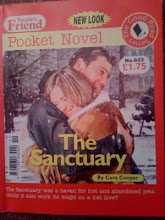
Getting started..... Very occasionally in life you get lucky like I did when PF asked me to try writing a serial. BUT mostly 'lucky' is a misnomer. By and large I believe you make your own luck. I made mine by being persistent in submitting short stories to women's magazines, I'd been trying for years and finally broke through with PF taking about five of my shorts. Having short stories accepted made me try pocket novels. Once I'd had my sixth one of these published, one of the editors at PF e-mailed and said you can obviously write long as well as short, would you like to try a serial? Would I? You betcha! I wouldn't dream of turning down an offer like that even though it terrified me. I had two possible ideas, one was set in a helicopter rescue squadron in Scotland, the other was a cosy crime/romance set in sunny Italy. I tried the latter on them as I loved the setting and had just been on holiday to Sorrento. I'd done my usual research keeping tickets from ferries and trains, brochures from tourist sites, underground maps etc. I always do this so that I can set a story in a location even if it's years after I've visited. Armed with my research and a hazy plotline about someone who buys a house by the sea in an internet auction I was set to begin. That was my route into serial writing, different writers have different routes to breaking into that genre. One thing's for certain, magazine readers love an absorbing serial and editors are always keen to have good ones because once a reader is hooked they'll come back again and again. One of the main things to remember is what a commitment a serial is. During the two years from start to finish I had numerous other writing commitments on the go from critiquing to writing novellas. Every time I got a serial instalment back though I had to drop those and get cracking on the serial. The editors would gently remind me if there was silence for too long and I knew then, however difficult I was finding it to come up with new plotlines or resolve old plot issues, I needed to come up with the goods. If your writing world is one where because of your day job or other commitments you would find it impossible to keep up the momentum and work to an editor's beck and call you may want to consider whether serial writing is really for you. As editors pay on the submission of each instalment, they are investing pretty highly in your capacity to keep going and come up with the goods right to the last instalment.
What to send..... Firstly, read the magazine's submission guidelines very carefully. If they ask for a two page synopsis and the first instalment, do exactly that, no more, no less. Secondly, read the magazine, get hold of back copies. Study what other serials there have been and try and come up with something different but not so different that it wouldn't be in keeping with what the magazine's values are. Ask friends, neighbours, your FaceBook and Twitter contacts, the lady standing next to you in the supermarket queue, anyone about what magazines they read and why. Hopefully you'll find people who read fiction in mags and they will tell you what grabs them and what doesn't.
Be prepared to do amendments .......... Very lucky is the writer who DOESN'T have to do revisions and remember for a serial you have to have each instalment approved before writing the next. That is one of the frustrations. With a pocket novels I have zoomed along at my own pace and been able to see the novel form in its entirety as one whole piece of work. With a serial be prepared for the stopping and starting. You cannot get into your groove and sail along. You have to hold yourself back and wait sometimes for many weeks (by which time you've forgotten half the story and will have to go back and reread) before you can gear up again. Often, whilst writing one episode I would make notes on the next but I never went further than notes before getting the go ahead as I simply don't have the time to waste. So, in short, accept changes and be open to them. The editors really do know their readers. My first instalment had about nine requests for amendments. I nearly folded up into a little ball and started shaking. They gradually reduced as the instalments went on but then 7&8 both had significant reworkings requested. The main change was, by that time I had become used to them and what looked impossible I knew, with a lot of work, would be sorted.
In my next blogs I'll cover setting, plotting, emotional involvement and characterisation within the serial world.
Subscribe to:
Posts (Atom)